
Dialing Within West Virginia
Ten digits is the whole rule for a local call here. That has been true since February 2009, when mandatory ten-digit dialing took effect ahead of the 681 overlay. A seven-digit call does not connect anywhere in the state, no matter how short the distance. Long distance and toll calls may want a 1 in front of those ten digits depending on the carrier and the equipment, and older office systems and alarm panels are the usual holdouts on that point. Anything beyond a plain phone number runs on a phone code of its own, which is where the short codes come in.
| Call Type | Phone Code Format | Example |
|---|---|---|
| Local within West Virginia | Ten digits, area code first | 304-348-8000 |
| Long distance in the United States | 1 plus ten digits | 1-304-746-2100 |
| Toll-free | 1 plus a toll-free code plus seven digits | 1-800-642-9066 |
| International from West Virginia | 011 plus the country code plus the number | 011 then the destination |
| Service codes | Three digits, no area code | 211, 811, 988 |
The West Virginia area codes page covers why the ten-digit rule arrived and which code goes where.
N11 Service Phone Codes Used in West Virginia
N11 codes are the three-digit shortcuts that reach a service instead of a person. Nine of them are in use nationally, and each one behaves a little differently in West Virginia because some are run by the state, some by your carrier, and one by nobody at all here. The 311 line is the notable gap. West Virginia has no statewide service number, so 311 works only where a particular city has set one up.
| N11 Phone Code | What It Reaches in West Virginia |
|---|---|
| 211 | WV 211, the statewide referral line for food, housing, utility help, and community services, answered day and night |
| 311 | Nothing statewide. A handful of cities run their own service lines, and everywhere else the city switchboard does that job |
| 411 | Directory assistance from your own carrier, usually with a charge per call |
| 511 | Road and travel conditions where the service is offered, which matters most during winter storms in the mountains |
| 611 | Repair and customer service for whichever carrier serves the line you are calling from |
| 711 | Relay service for TTY and deaf or hard-of-hearing callers. West Virginia American Water lists it as its TDD route, and Legal Aid uses it for phone intake |
| 811 | Line marking before excavation. Homeowners and contractors both use it, and it is scheduled work rather than an emergency call |
| 911 | Police, fire, and ambulance dispatch, the only N11 code that sends anyone out |
| 988 | The Suicide and Crisis Lifeline, which West Virginia moved to in 2022, by call, text, or chat |
Two of these deserve extra detail. WV 211 also takes a text message with a ZIP code sent to 898-211, and it publishes 833-848-9905 for phones that cannot reach a three-digit code at all, which is common on internet-based and Wi-Fi calling service. That backup number is easy to miss until the short code fails.
The service behind 211 is searchable too, so you do not have to call to see what exists.
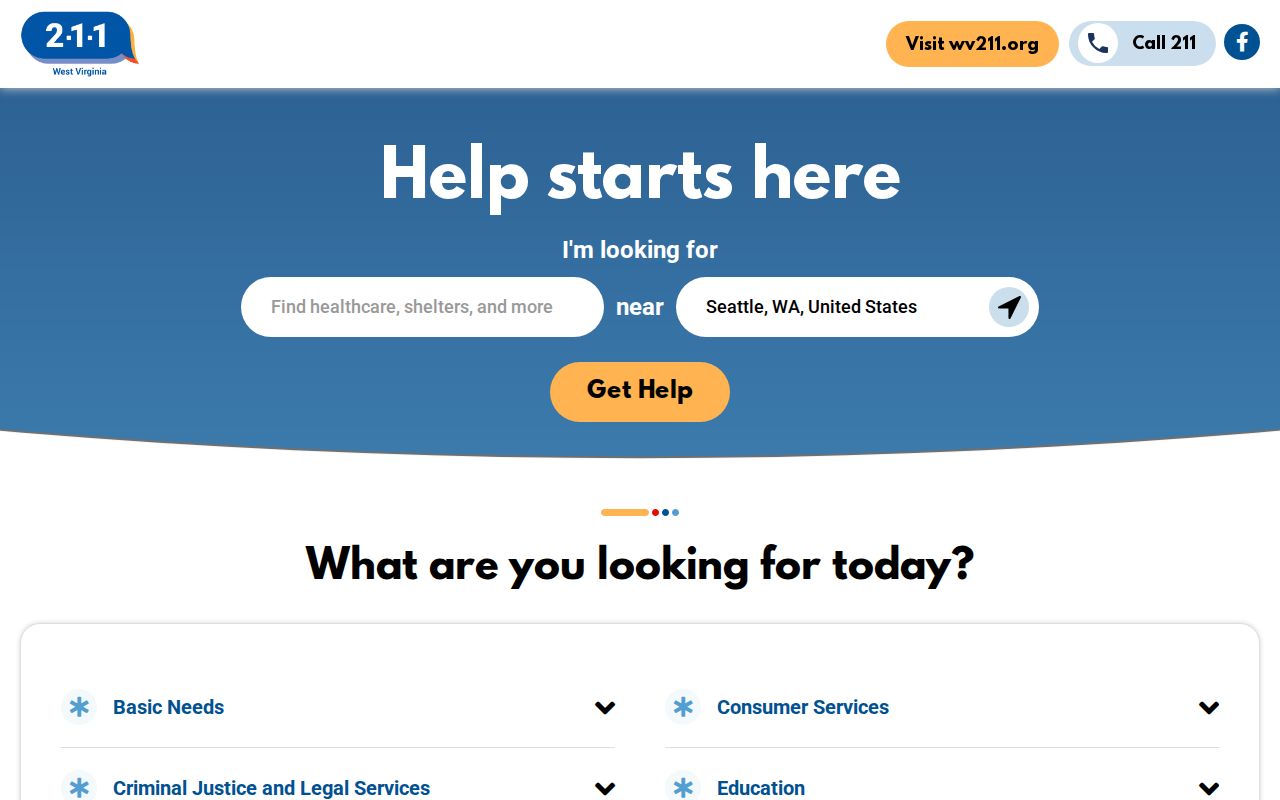
The WV 211 database lets you browse programs by need and county before deciding whether to dial, which is useful when you would rather read than talk to somebody.
Note: 988 handles a mental health or substance-use crisis, while 911 handles physical danger, so a weapon, a fire, or an attempt needing rescue still starts at 911.
Star Phone Codes on West Virginia Lines
Star codes are the two-digit commands you punch in after an asterisk to change how a call is handled. They came out of the landline era and support has thinned since. Traditional home and office lines usually take all of them, while mobile plans and internet-based service pick and choose. Ask your carrier before relying on any of these in a situation that matters.
| Star Phone Code | Action |
|---|---|
| *57 | Marks the last call for a trace. The record goes to law enforcement rather than to you, so a police report has to follow |
| *60 | Adds specific numbers to a block list on lines that support it |
| *67 | Hides your number on the next call you place |
| *69 | Calls back whoever rang you last |
| *70 | Turns call waiting off for one call so a fax or a serious conversation is not interrupted |
| *72 | Switches call forwarding on, followed by the number you want calls sent to |
| *73 | Switches call forwarding back off |
| *77 | Refuses calls that arrive with the number hidden |
| *82 | Shows your number on the next call from a line that normally hides it |
The trace code is the one people reach for after a threatening call, and it is worth knowing how it really works. Dialing *57 flags the call in the carrier's records. It does not tell you the number, and nothing happens with it unless you report the incident to your local police or the State Police so they can request the record.
The Two Area Phone Codes for West Virginia
Area codes are phone codes too, and West Virginia has the shortest list in the region. Both of the state's codes cover the same ground, which is why neither one narrows down a caller's location. What they do determine is that the code has to be dialed on every call.
- 304 - the original statewide code, assigned in 1947 and still covering all 55 counties
- 681 - the statewide overlay, with numbers issued anywhere in West Virginia since 2009
- No third code - nothing else has ever served the state, and no relief plan for another one is on file
Neither code carries a region, a city, or a service type. A 681 line can be a mobile in Beckley, a clinic in Martinsburg, or a business phone system in Wheeling. The geographic detail beneath both codes sits on the West Virginia area codes page.
Toll-Free and Premium Codes in West Virginia
A toll-free phone code says nothing about geography. The state uses them heavily for lines that people call from every corner of West Virginia, which is exactly what they are for. The DMV answers residents on 1-800-642-9066, the Public Service Commission takes utility complaints on 1-800-642-8544, the Attorney General runs a consumer hotline on 1-800-368-8808, the abuse and neglect intake line is 1-800-352-6513, the Department of Education uses 1-833-627-2833, and Legal Aid takes applications on 866-255-4370. Each new toll-free code opened as the last one filled, which is why older agencies hold 800 numbers and newer services start at 833.
| Toll-Free Phone Code | Rolled Out |
|---|---|
| 800 | 1967 (original) |
| 888 | 1996 |
| 877 | 1998 |
| 866 | 2000 |
| 855 | 2010 |
| 844 | 2013 |
| 833 | 2017 |
Premium codes work the opposite way and charge the caller. The 900 code is the well known one, and carriers commonly block it unless a customer asks for access. The old 976 pattern was a local premium service, now heavily restricted, though it has not vanished entirely. Public exchange records still show 681-976 assigned to Charleston as a premium block that has to be dialed with a 1 in front.
Country Code +1 and International Phone Codes
West Virginia sits inside the North American Numbering Plan, which shares the country code +1 with the rest of the United States, Canada, and a couple dozen territories. You almost never dial it inside the country, but every call arriving from overseas needs it, and mobile phones will accept it happily on a domestic call as well. Storing numbers in the full +1 304 or +1 681 format is a small habit that saves trouble when a phone travels.
- From a West Virginia landline calling abroad, dial 011, then the destination country code, then the local number.
- From a mobile phone in West Virginia, hold down 0 until a plus sign appears, then dial the country code and the number.
- From another country calling West Virginia, use that country's exit code, then 1, then the ten-digit number starting with 304 or 681.
Note: A West Virginia number stored without the +1 will often fail on the first try after a phone connects to a foreign network.
Local Exchange Phone Codes in West Virginia
The three digits in the middle of a number are the exchange, also called the central office code. Since both area codes blanket the whole state, the exchange is the part that still carries a local signal. Each one was assigned to a rate center, so 304-413 points at Morgantown, 304-954 at the Charleston zone, 304-962 and 304-963 at Huntington zones, and 304-964 at Scott Depot. Newer 681 blocks followed the same rate centers, which is why 681-217 and 681-505 are Charleston, 681-279 and 681-529 are Huntington, and 681-212 and 681-668 are Morgantown.
Some exchanges pick up an institutional reputation, and a public staff directory is the easiest place to watch that happen.
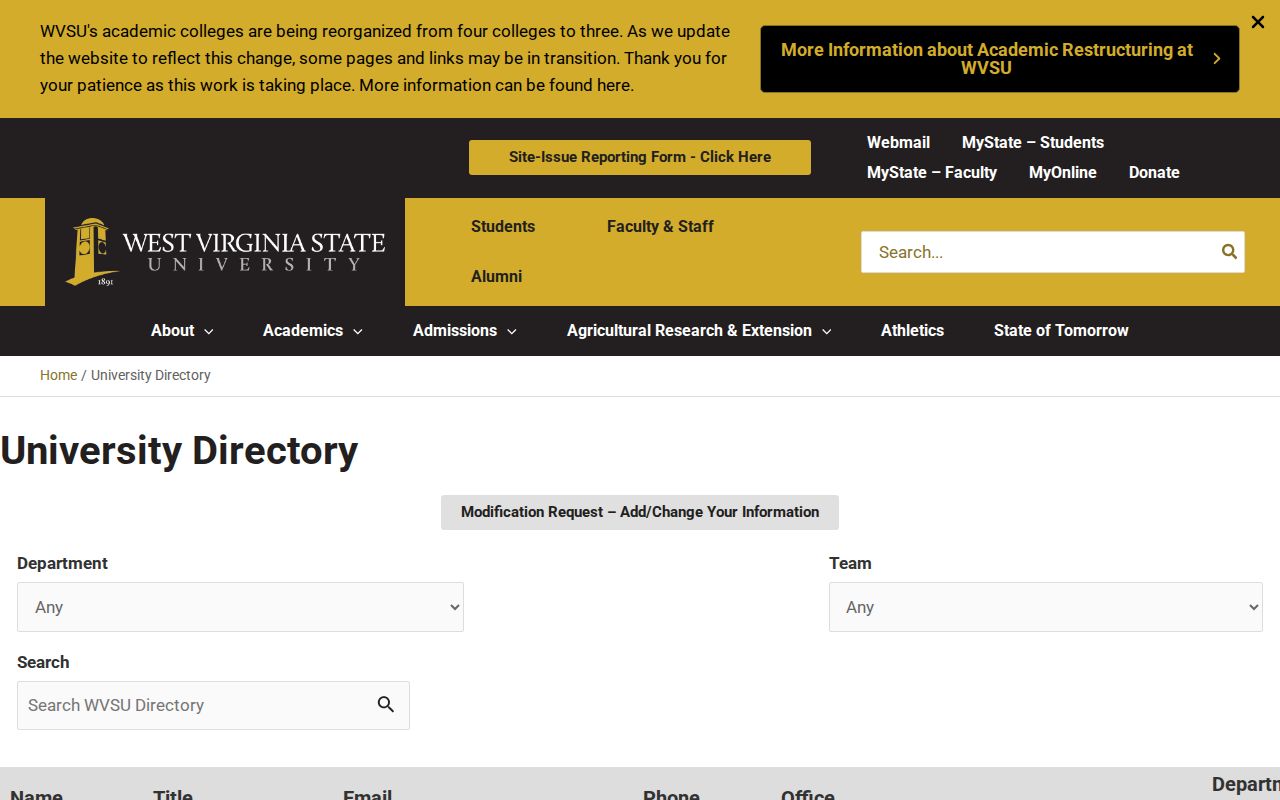
Nearly every entry in the West Virginia State University directory runs on the same exchange, with human resources listed at 304-766-4278. The pattern repeats across the state. 304-558 reads as state government in Charleston, 304-348 as Charleston city hall, 304-357 as Kanawha County, 304-293 as WVU, and 304-696 as Marshall and Huntington.
Do not treat any of that as identification. Number portability lets a line keep its exchange when it changes carrier or moves onto an internet service, and a spoofed call can print a government-looking exchange on your screen without ever touching one.
STIR/SHAKEN and West Virginia Phone Code Labels
STIR/SHAKEN is the caller-ID authentication framework carriers use to check whether the number on an incoming call was really handed over by the network that claims it. When the handoff does not check out, or when a number matches a heavy pattern of complaints, the phone shows a warning instead of a name. That is where the Likely Spam and Scam Likely labels come from.
The framework helps, and it is not proof of anything. A call can pass authentication and still be a fraud, because the check confirms the path rather than the honesty of the person on the line. Labels also get it wrong in the other direction, and a legitimate West Virginia agency or clinic number occasionally gets flagged. The FCC explains the framework on its call authentication page.
When a call slips through, the FCC takes the complaint directly.
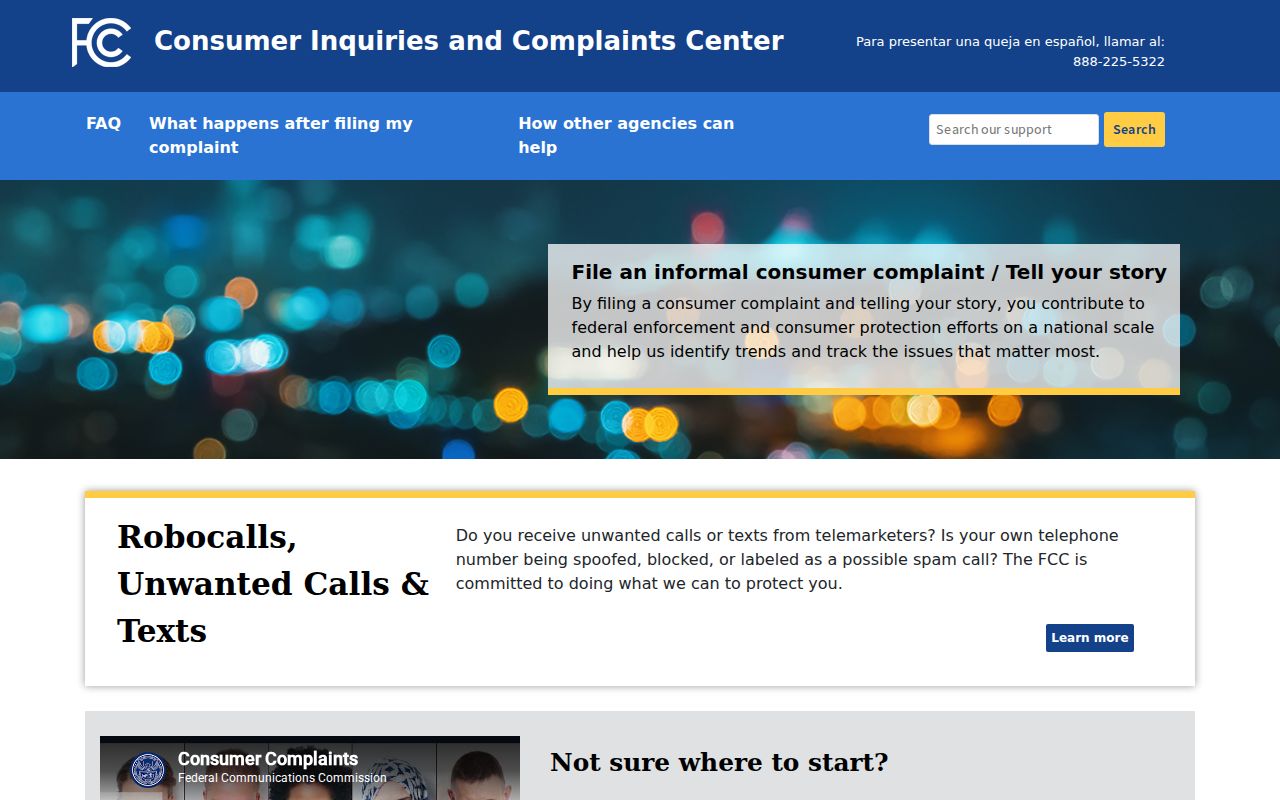
The FCC Consumer Complaint Center sorts phone problems into unwanted calls and texts, spoofing of your own number, blocked or mislabeled calls, and provider disputes. Picking the right category matters, because the spoofing category is the one that covers a caller borrowing a real West Virginia number.
Blocking Unwanted Calls in West Virginia
Registering a number is the other half of the job, and it is free. The national registry stops sales calls from companies that follow the rules, which removes a genuine share of the noise even though it does nothing to outright scammers.
Registration on donotcall.gov does not expire, and the same site takes reports about calls that keep coming afterward. FTC robocall guidance is blunt about the limit: a scammer already breaking the law is not going to check a list first.
Carrier tools cover what the registry cannot. AT&T ActiveArmor, Verizon Call Filter, and T-Mobile Scam Shield label or block suspected spam on the lines they serve, and most phones can silence unknown callers outright. West Virginia's own channel is the Attorney General's Consumer Protection Hotline at 1-800-368-8808 when a call cost somebody money.
West Virginia Phone Code Definitions
A handful of terms come up whenever phone codes get discussed, and most of them are shorthand from the carrier side of the business.
- NPA
- The industry name for an area code, meaning the first three digits of a ten-digit number.
- NXX
- The exchange, or the second block of three digits, tied to a rate center rather than a town line.
- N11
- The nine three-digit service shortcuts, running from 211 through 988, that reach a service rather than a subscriber.
- Vertical service code
- A star followed by two digits that tells the switch to handle your next call differently.
- Toll-free code
- An area code that bills the receiving business rather than the caller, such as 800 through 833.
- NANP
- The North American Numbering Plan, the shared +1 system that West Virginia numbers belong to along with the rest of the United States and Canada.
How to Look Up a West Virginia Phone Code
Two official references settle almost any question about a phone code. NANPA administers the numbering plan and publishes what has been assigned to whom. The FCC sets the policy underneath it and takes the complaints when something goes wrong. Neither one identifies a caller, which keeps expectations sensible.
For exchange-level questions, NANPA's central office code records download as compressed files sorted by state and code. They show which carrier received a block and when, which is useful research and still not proof of who holds a line today. When the real question is who is calling, the West Virginia phone numbers page covers the directories that can answer it.